About Diocese of Manicaland
Our Story
Since 1891
The Anglican Church in Zimbabwe is a an offshoot of the Anglican Province of Southern Africa. Mashonaland is part of the Diocese of Bloemfontein. Church Synod of the Province of Southern Africa convened in 1891 and agreed to the creation of the new diocese of Mashonaland. J.C. Weller observes that it was not surprising that the synod invited Bishop Knight Bruce to become its first Bishop. Bishop Knight Bruce came via Beira and travelled to the colonial capital Salisbury.
The journey by sea had its trying moments given the boundary war that was raging between the Portuguese and the British South Africa Company as well as the malaria and tsetse fly that infested part of the journey. Finally, the Bishop arrived in Mutare on the 1st of June 1891. Upon arrival in his new See, Bishop Knight-Bruce wrote his resignation from the See of Bloemfontein. He opted for the new Diocese that did not exist
Founding of the Diocese of Manicaland and its Episcopal Leadership over the Years
The Diocese of Manicaland was founded 90 years later in 1981 and soon after Zimbabwe’s independence. Bishop Elijah Musekiwa Peter Masuko becoming the first Bishop. He was succeeded by Bishop Sebastian Bakare 1999-2005 and Elson Jakazi who lasted only a few months November 2006 to September 2007 and was excommunicated in December 2007.
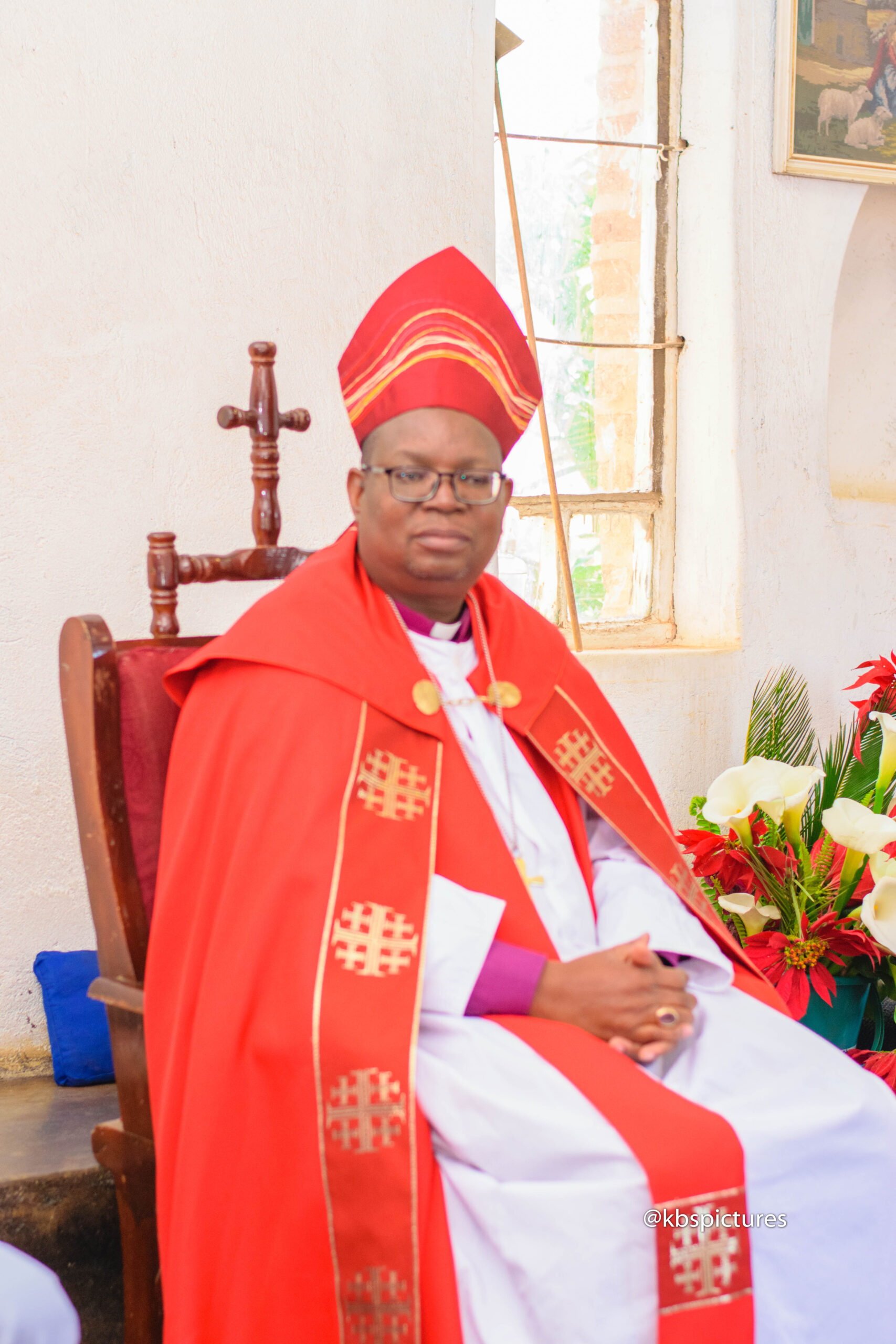
Bishop Peter Hatendi was invited to serve as an Acting Bishop in the year 2008 and was succeeded by Bishop Julius Tawona Makoni in 2009 who resigned in February 2015 and the current head, Erick Ruwona became the Bishop in May 2015.
Why is the Diocese of Manicaland Unique and Important
The Majority (75%-80%) of Anglicans in Zimbabwe have their roots in Manicaland. This is because the church established most number of schools and health facilities in Manicaland and Wedza. We have our Head Office (Human Resource Building, named after a national hero and CPA Provincial Registrar, Herbert Wilshire Chitepo), located at number 113 Herbert Chitepo Street, Mutare, Zimbabwe. It is one of the success stories of our Diocese.
Currently, the Diocese of Manicaland has 345 congregations and runs 54 primary and secondary schools and is in the process of reclaiming the other 80 schools being run by the Rural District Councils. Reclaiming these schools is also about claiming our inheritance bequeathed to us by our forebears. It will also enable us to reclaim our role to evangelize for the Anglican Church in Zimbabwe. We can only do that once we start running the schools like before and appoint competent evangelists to do the work and deliver.
Our biggest challenge as a Diocese is that those who were able bodied and 40 years in 1981 are either late or old. The average active and responsible membership in the church is above 60 years old. The Church is not welcoming the youth and is stuck in the old ways of doing things and not responding to the demands of digitalization. Most of our youth would rather be online than locked up in a church. Ways must be found by the youth on their own. We now have a vibrant junior church policy with special focus on Sunday school and Youth Ministry running the junior church
Core Values
The Diocese of Manicaland’s values include Team Work, Integrity, and Persistence in Prayer (PIP)
Our Vision
Our vision is to be a united, empowered and life-giving Church.
Our Mission
As a Diocese we have undertook a review of our strategic plan and harmonised it with the ACZ strategy in 2022. We have reduced the thematic areas to five, as guided by the Anglican Communion five marks of mission. This means that we continue to implement all our 7 strategic pillars based on the five marks of mission. The third and fourth mark have been split into two for emphasis. The seven pillars are:
i. To proclaim the Good News of the Kingdom - Tell
- Evangelism is about increasing the number of our members. The target is that each member brings two new members to Church per year. Total Church membership now stands at 20923 members an increase of 2575 from 18348 in as at 2022 synod. Evangelism in School on target
- The ‘resurrection movement’ has resulted in us establishing new congregations at Resurrection Church Watsomba, Resurrection Church Odzi Valley in Mutasa Archdeaconry
ii. To teach, baptize and nurture new believers - Teach
- We have three sections of this thematic area ordination training, post ordination training and lay training. We have accelerated ordination training. Below are learners who have attained first and second degrees in the last two years:
- The goal to have all our eligible clergy to continue studying attain at least a second degree by the year 2025 is on course.
- The target is also to increase communicant members in the Church through confirmation classes and confirmation. Communicants now stand at 10393 an increase of 2907 during the period of reporting.
iii. To respond to human need by loving service - Tend
- This mission focusses on education, health and community development initiatives. Our vision is to economically empower churches through the ‘Church and Community Mobilisation Process’ (CCMP) also known as Church and Community Transformation (CCT). Resourcing is about gathering, mobilisation and managing resources.
- We have mobilised adequate resources to finance our Mission and Ministry.
- Most of the resources have come from levy from our boarding schools.
- Our resource mobilisation has been compromised by the fact that we depend and retired and elderly folk and most able bodied and working members are excluded from Church leadership and have left the Church for the Pentecostal and prophetic Churches where they are welcomed and allowed to use their various leadership skills and gifts.
- Health focuses of on standing in solidarity with the poor and needy and serving communities where we operate
- Our service to the community has continued through our local Churches, educational and health institutions.
- Education – Focus now is on improving results and increasing enrolment before we move into running schools without government funding for teachers.
- Our main focus now is increasing enrolment in our boarding schools (double enrolment at St David’s High School, St Augustine High School and St Faith’s High School.
- This comes after a realisation that our largest schools enrol an average of 1000 learners yet Mavhudzi High now enrols 1800.
iv. Infrastructure Development and Maintenance and Resource Mobilization
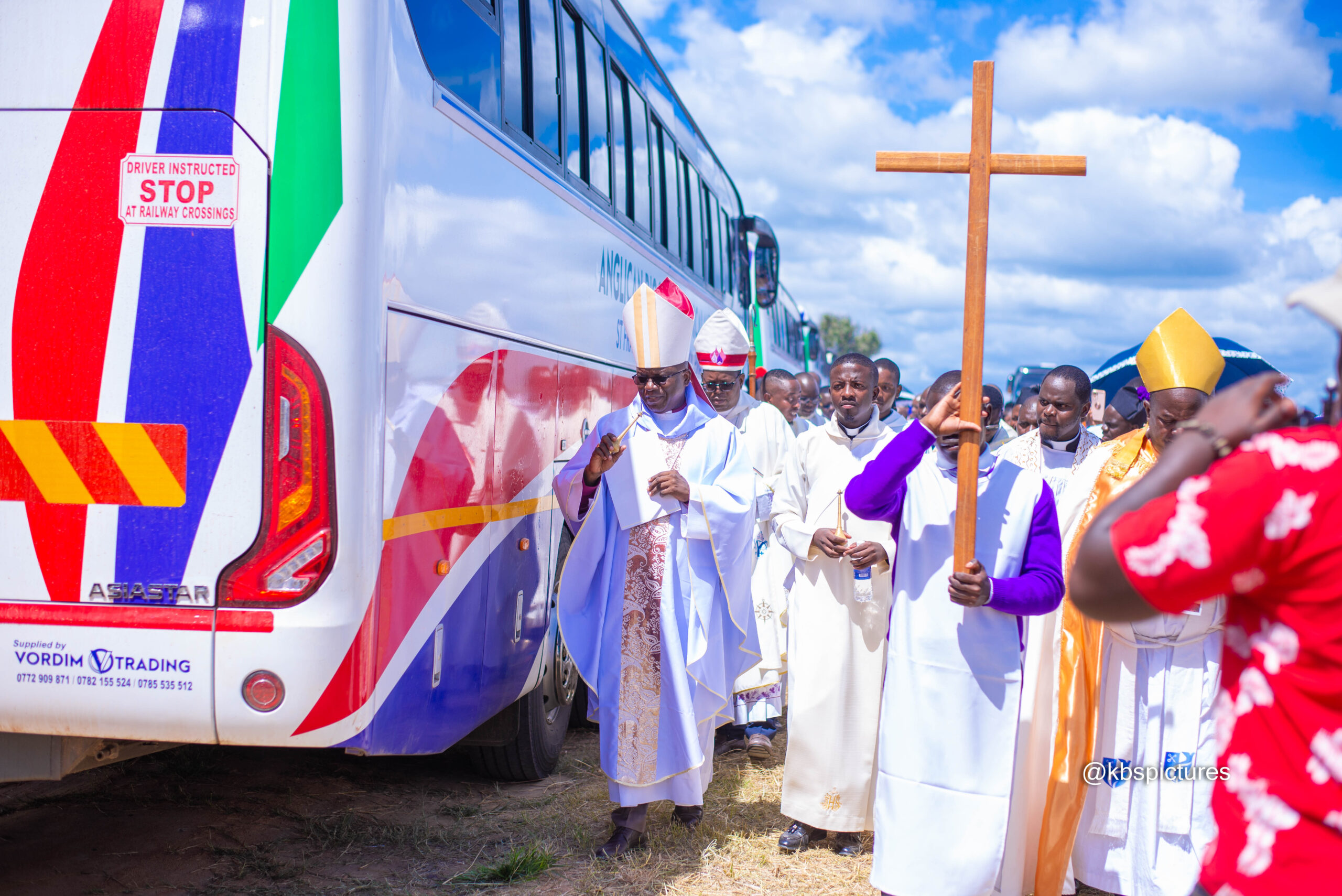
- The Diocese is on the verge of acquiring state of the art buses, through its schools. A Business development manager responsible for transport and logistics will be appointed to run the fleet profitably and sustainably. Expect no free rides because some of the institutions require our support.
- The business development manager will also work with the Education Secretary and Archdeacons to recover our properties and schools currently run by RDCs and ensure that all our property ownership is regularised.
- Recovery of St Simon and Jude in Penhalonga is on course. Residential stands will be sale once the their development is complete. Proceeds will be used to finance the recovery and develop all our properties as soon as we reclaim them.
- We have also started working on regularising land ownership at St Augustine of Hippo, Mission Farm. Most of the land is being parcelled out illegally by unscrupulous elements, yet they know that the land belongs to the Church. We have no plans to chase away anyone, even the illegal tenants, but that will not stop us from regularising their stay. The long arm of the law will befall those who resist the regularisation.
v. To seek to transform unjust structures of society, to challenge violence of every kind – Transform
- Poverty is the key midwife for oppression, violence and injustice in our communities
- We have agreed to work with our partners on economic empowerment programs.
- Hope Foundation – They delay in coming on board to promote saving schemes – mikando – is unbecoming and a new team is being appointed to run with this.
- As a Diocese we continue to participate in community development initiatives through CCMP to deal with poverty. Envisioning for Archdeaconries now complete, we now focus on work and results on the ground. CCMP is the both the planning, implementation and monitoring and evaluation tools we use for our mission and ministry.
- Through ecumenical bodies the Diocese remains active in promotion of good governance, democracy initiatives and supports the broad-based national dialogue being undertaken and facilitated by the Zimbabwe Heads of Christian Denominations (ZHODC)
- This initiative brings together the Evangelical Fellowship of Zimbabwe (EFZ), Zimbabwe Catholic Bishops Conference (ZCBC) and UDACIZA (Vapositori) and the Zimbabwe Council of Churches (ZCC)
- Our Clergy cannot actively and publicly participate in partisan politics – but laity are encouraged to even seek public office provided they receive counsel from their Church (Priests and Bishops).
vi. To pursue peace and reconciliation – Transform Peace Building, Reconciliation and Unity
- Our focus is to work for peace, reconciliation and transforming our communities and Churches.
- The peaceful co-existence continues to be compromised by some of us who continue to follow the suspended clergy.
- Disciplinary matters are between employer and employee, anything else is drama.
- The Diocesan Standing Committee has approved that 5% of any budget must be set aside for peace building, reconciliation and unity initiatives. All congregations who have budgets must set aside 5% as a minimum
vii. To strive to safeguard the integrity of creation, sustain and renew the life of the earth – Treasure
- The main focus of this pillar is to protect, care for and renew life on our planet.
- At our 2022 Synod we launched the Anglican Communion Forest Initiative which focus on three things: Climate Change, Biodiversity and Pollution
- The tree we planted has grown, but at the time of the compilation of this report it was not labelled.
- We are now part of the Green Anglicans Movement, active on the ground and on social media. Sent us whatever you do on the environment so that it will be shared and might inspire someone somewhere.
- We continue partnership with the Forest Commission and the Environmental Management Agency (EMA).
- We participate in the national clean-up campaign monthly, every first Friday of the month. We work with government agencies who facilitate our management of the environment and waste. The 50 fruit trees we donated to Victoria Chitepo Provincial Hospital in Mutare only 12 have survived with stunted growth and poor management, they have failed on their promise to manage them properly, we also set up a tree plantation at St Francis Primary School, Newengo.
- Not enough trees are being planted by our members and institutions. Do we have targets for the work that we do? How do we know whether we are doing well or not? Failure is setting a low target and hit! No targets is more than failure.
- Each congregation and ecclesiastical division must have an environment coordinator who is visible.
Leadership
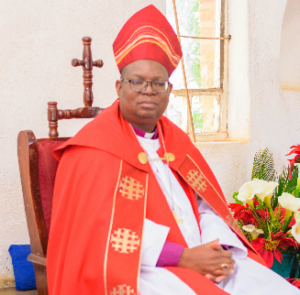
- Bishop: The Right Reverend Erick Ruwona
- Diocesan Secretary: Reverend Edmond Samutereko
- Dean: The Very Reverend Fortune Kuzinya
- Vicar General: Reverend Mukome
- Archdeacon of Institutions: Venerable Aleck Chikomba